
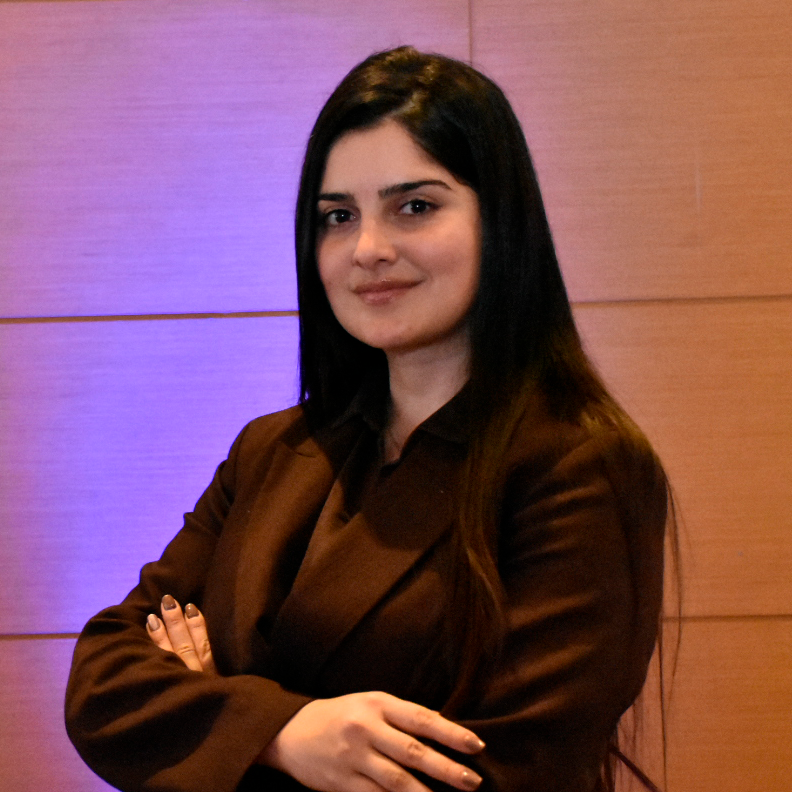

Carolina Marañón serves as Undersecretary of International and Business Relations for the Province of Tucumán, Argentina, where she leads trade missions, institutional relations with embassies and multilateral organizations, and the province’s international cooperation agenda.
Her work is closely connected to Tucumán’s transformation into a growing technology and knowledge-economy hub. Since the adoption of the province’s Knowledge Economy promotion framework in 2022, she has contributed to initiatives designed to strengthen the local technology ecosystem, attract investment and create the conditions for long-term workforce development.
With a Diploma in Artificial Intelligence and Government 5.0 from Universidad Austral, Carolina brings together expertise in public policy, international cooperation and emerging technologies. Her experience also includes foreign trade, international logistics and compliance, as well as teaching International Cooperation and Regional Integration at Universidad San Pablo-T.
A key focus of her work is connecting economic development with education and workforce transformation. Tucumán has expanded professional training initiatives across municipalities and technical schools, introduced pilot programs exploring the use of artificial intelligence in education, and developed partnerships between government, industry and educational institutions to prepare new generations for technology-driven careers.
Her perspective also highlights the importance of international collaboration. Through initiatives such as the EU-funded IURC-LAC Digital Transformation partnership, Tucumán has connected its local digitalization and workforce strategies with regions and cities including Santiago de Chile, Bucharest-Ilfov and Bacău.
At FACTORY 4.0 Conference 2026, Carolina Marañón will join Panel 6 – Workforce 2026: Upskilling for the AI-Powered Factory, bringing a public-policy and regional development perspective to the conversation about how governments, companies and education systems can work together to build the skills required by an increasingly AI-powered economy.
Drawing on Tucumán’s experience, she will explore how supportive policy frameworks, technical education, international cooperation and cross-sector partnerships can help workforce transformation evolve alongside industrial and digital transformation.
Meet Carolina Marañón at FACTORY 4.0
Discover how public policy, education and international cooperation can accelerate workforce upskilling and help regions prepare talent for the AI-powered economy.